London Underground Tube Strikes: How the City Fights Back Against Disruption
 Admin
Admin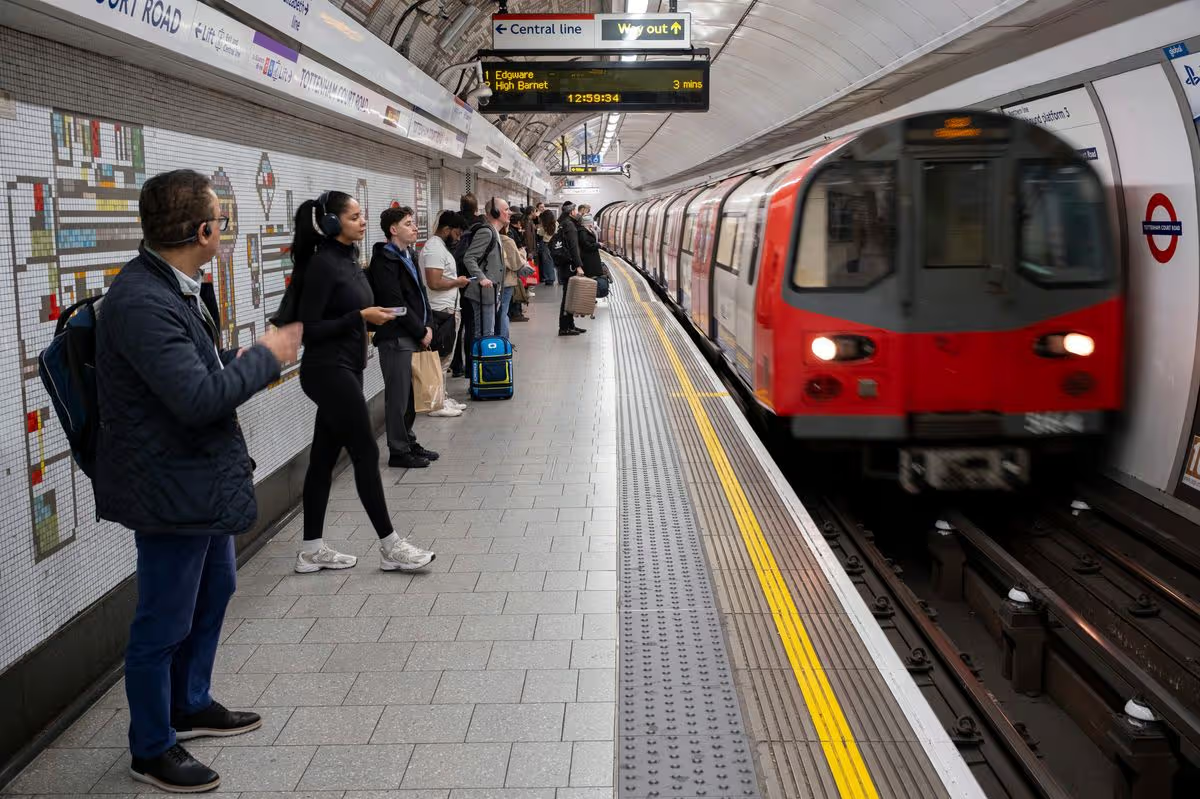
The Day London Stood Still: Inside the London Underground Tube Strikes
The recent London Underground tube strikes have become one of the most impactful transport disruptions in the city’s modern history. At the heart of London’s identity lies its vast and complex transport network — a system that millions of residents and visitors lean on every day. When disputes over pay, working conditions, and staffing erupted into widespread industrial action, the effects rippled far beyond the platforms, challenging Londoners’ resilience and prompting urgent conversations about the future of public transport in the UK.
For anyone who lives in or visits the capital, the London Underground is more than just a way to travel. It is a lifeline — a deeply woven part of everyday life. So when talk of strikes began to dominate headlines, anxieties surged. What would it mean for commuters, businesses, and the broader rhythm of life in one of the world’s busiest cities?
Why the Tube Strikes Happened
At the center of the London Underground tube strikes lie complex and long-standing tensions between Transport for London (TfL) and its workforce, represented predominantly by powerful trade unions. The main issues fueling the strikes were disputes over wages, job security, and working conditions. Frontline workers faced rising living costs in London, and many felt that their compensation no longer reflected the demands and pressures of their roles.
Beyond pay, there were broader concerns about job cuts and changes to working practices that employees feared would degrade both conditions for staff and the quality of service for passengers. These grievances did not emerge overnight. For years, staff surveyed and interviewed expressed deep frustrations over increasing workloads, unpredictable hours, and the relentless pace that modernizing the Tube network imposed.
Efforts at negotiation, including offers and counteroffers, had repeatedly faltered. Unions argued that proposals from TfL were insufficient and failed to address the core issues. Faced with what many workers described as an existential threat to their livelihoods and professional standards, union leaders put forward strike mandates that were backed by significant majorities of their memberships. This culminated in a series of rolling strikes that brought entire lines to a halt and reverberated across the city.
The Immediate Impact on Daily Life
When the first waves of London Underground tube strikes hit, the city’s pulse changed dramatically. With tubes canceled and lines closed, commuters scrambled for alternatives. Bus routes became overcrowded, cycling surged as residents sought freedom from congestion, and roads that are typically slower than the Tube turned into gridlocked arteries.
For many office workers, the commute doubled or even tripled. Restaurants and cafes that counted on morning and evening travel traffic saw footfall fall sharply on strike days. Residents who relied on the Tube to reach vital appointments found themselves stressed and uncertain. The media buzzed with stories of Londoners rising before dawn to secure limited bus space or walking miles to reach their destinations.
Even those who typically worked from home felt a secondary impact. Clients delayed meetings or shifted schedules to accommodate broader disruptions. Small businesses that depended on routine commuter traffic witnessed lower sales. In short, the strikes did not merely inconvenience passengers; they disturbed the essential rhythm of a city that thrives on mobility and efficiency.
The Broader Economic and Social Consequences
The effects of the London Underground tube strikes extended well beyond personal inconvenience. Economists and business groups weighed in, estimating that repeated transport disruptions could cost London’s economy millions in lost productivity. Retailers near major stations reported declines in customer numbers on strike days, while hospitality venues faced uncertainty about staffing as workers struggled to reach their workplaces.
Beyond measurable financial losses, the strikes also sparked debates about social equity. Workers in lower-paid roles, who often could least afford alternative travel costs, felt the brunt of the disruptions more intensely. A day of delayed travel or extra expenses on buses and taxis disproportionately impacted these groups compared to those who could work remotely or had flexible schedules.
The strikes also prompted introspection about the value and future of public transport infrastructure in a post‑pandemic world. Ridership patterns had already shifted significantly since 2020, with many commuters opting for hybrid work arrangements. The Tube, once reliably packed at rush hour, was facing structural changes in demand. Unions argued that this evolving landscape meant workers deserved greater job security and fairer compensation, while TfL confronted the challenge of balancing budgets in a time of declining revenue.
Voices from the Platform
Perhaps the most telling insights came from the people on the front lines. Many Tube workers shared stories of dedication to keeping London moving, often under intense pressure. Years of customer-facing duties, abrasive interactions, and stringent time pressures had left some staff feeling worn down. For these workers, the strike was not simply about a single issue — it was a collective stand against systemic challenges they believed were jeopardizing the network’s integrity.
Conversely, some commuters expressed sympathy for the workers’ cause but frustration at the timing and impact of the strikes. Pensioners, students, and professionals alike voiced mixed emotions: support for fair treatment of workers overshadowed by exasperation at repeated travel chaos. These nuanced public sentiments revealed the Londoner’s inherent struggle between empathy and practicality.
Political and Public Discourse
As the strikes continued, political leaders and commentators entered the fray. Some politicians painted the strikes as evidence of outdated union influence in a modern economy. Others faulted government oversight and funding models that left TfL financially strained, arguing that workers were responding to broader policy failures rather than organizational mismanagement.
Public discourse spilled onto television, radio, and social media platforms, reflecting the deeply personal nature of the issue for many Londoners. Panels debated whether transport should be considered a public good that warrants greater investment, or a service that must operate within strict financial constraints. These discussions underscored broader tensions in UK society about labor rights, economic recovery, and the role of essential services in an evolving work landscape.
Efforts to Resolve the Dispute
Amid mounting pressure from commuters and business groups, efforts to resolve the dispute intensified. Negotiators from both sides returned to the table several times. Union representatives issued statements emphasizing their willingness to find common ground, while demanding guarantees that workers’ core concerns would be addressed in any agreement.
TfL, for its part, acknowledged the strain the strikes placed on Londoners and reiterated its commitment to reaching a solution. Leaders stressed the importance of financial sustainability and the need to modernize the service while balancing fair employee treatment.
Gradually, incremental progress was made. Mediated talks began to narrow the gaps between the two sides’ positions, leading to tentative agreements on pay increases, job protections, and phased operational changes. While not all disputes were fully resolved, these developments offered cautious optimism that the most disruptive strike actions might wind down.
Looking Forward: Lessons from the Strikes
The London Underground tube strikes left a lasting imprint on the city’s psyche and sparked important conversations about the future of urban transport. One clear lesson is that resilient public services require not just infrastructure investment, but sustained dialogue between management and workforce. Addressing worker concerns early, transparently, and collaboratively can prevent tensions from reaching a breaking point.
The strikes also spotlighted the need for adaptable transport planning. As commuting patterns evolve post‑pandemic, transport authorities must consider flexible staffing models, diversified revenue streams, and enhanced worker support systems that recognize the human effort behind the mechanical efficiency of the network.
For Londoners, the strikes were a reminder of how interconnected life in a major city truly is. When one critical service falters, the effects are felt in homes, offices, schools, and commercial districts alike. At the same time, the resilience and creativity with which residents adapted — from cycling long distances to reimagining their work schedules — revealed a collective resourcefulness that London has long been known for.
Conclusion: A City in Motion, Despite the Disruption
The London Underground has long been a symbol of resilience, innovation, and daily rhythm for millions. The recent London Underground tube strikes tested that resilience in ways few events have in recent memory. Through disruption, frustration, negotiation, and compromise, the city confronted both the fragility and strength of its transport system.
Ultimately, the strikes underscored a powerful truth: that public infrastructure is as much about people as it is about trains, tracks, and timetables. It is the workers who staff the stations, maintain the lines, and ensure safety that keep a city moving. Recognizing this can lay the foundation for a more stable, fair, and responsive transport network — one that honors both the needs of those who operate it and the millions who rely on it daily.
Frequently Asked Questions
What triggered the London Underground tube strikes?
The strikes were primarily driven by disputes over wages, job security, and working conditions between Transport for London and its workforce, represented by trade unions.
How did the strikes affect daily commuters?
Commuters faced significant disruptions, including canceled services, longer travel times, overcrowded alternatives, and increased reliance on buses, cycling, or walking.
Were the strikes limited to specific lines or network-wide?
The strikes affected multiple lines across the Tube network, with some actions bringing entire sections to a halt on designated days.
Did the strikes have economic consequences for the city?
Yes, repeated disruptions impacted local businesses, reduced productivity, and posed challenges for sectors dependent on reliable transport.
Has the dispute been resolved?
While progress has been made through negotiations, comprehensive solutions continue to evolve, with hopeful signs of reduced disruption and improved agreements
Man City Charges: Inside the Most Controversial Case in Premier League History