Composite Fencing: The Complete Guide to Durable, Low-Maintenance Privacy Fences for Your Home

When it comes to upgrading your outdoor living space, few improvements offer as much value as a new fence. It boosts curb appeal, adds privacy, increases security, and defines your property line. But traditional wood and metal fencing come with a long list of headaches: rotting, warping, rusting, splintering, and endless maintenance. That’s where composite fencing comes in.
In this guide, we’ll break down everything you need to know about composite fencing — what it is, why it’s quickly becoming the top choice for homeowners and contractors, how it compares to wood and vinyl, and how to choose the right composite fence for your property.
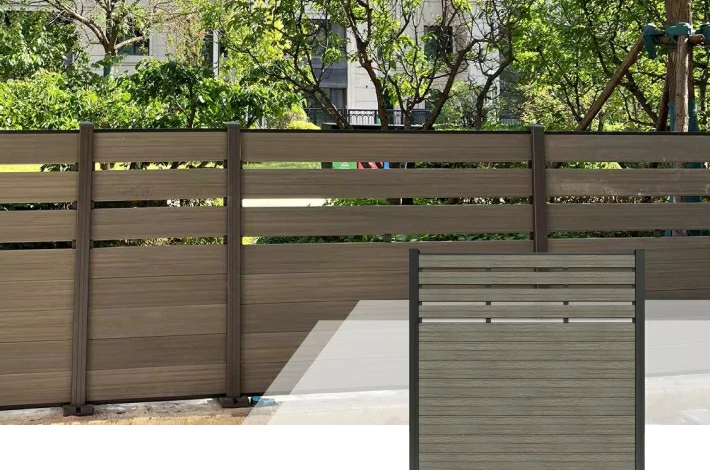
COOWIN composite semi-privacy fencing with horizontal slat design
What Is Composite Fencing?
Composite fencing is made from a blend of wood fibers and high-density polyethylene (HDPE) plastic, fused together through an advanced manufacturing process. This combination, often called wood-plastic composite (WPC), gives you the natural wood-grain look you love without the drawbacks of real timber.
Unlike solid wood, composite fence panels and pickets are engineered to resist moisture, insects, UV rays, and temperature swings. That means no rotting, no termites, no cracking, and no annual staining or sealing. The result is a fence that looks great for decades with a fraction of the upkeep.
Why Homeowners Are Switching to Composite Fencing
1. Exceptional Durability
Composite fencing is built to withstand harsh weather conditions, from intense summer heat to freezing winters. The dense composite material resists warping, splitting, and fading far better than natural wood, making it ideal for both residential backyards and commercial properties.
2. Low Maintenance, High Performance
Traditional wood fences need to be sanded, stained, and sealed every year or two just to stay functional. Composite fencing eliminates that cycle entirely. A simple rinse with soap and water is usually all it takes to keep your fence looking like new.
3. Real Wood Aesthetics Without the Drawbacks
Modern composite fencing technology has come a long way. Today’s composite boards feature realistic wood-grain textures and a range of natural color tones, giving you the authentic look of cedar or redwood without the risk of decay or insect damage.
4. Long Service Life
Because composite fencing resists rot, moisture absorption, and insect infestation, it typically lasts significantly longer than wood fencing — often 25-30 years or more with proper installation, compared to 10-15 years for traditional wood.
5. Eco-Friendly Construction
Most composite fencing products are made using recycled wood fibers and recycled plastics, reducing the demand for virgin timber and helping divert plastic waste from landfills. Choosing composite fencing is a practical way to make a more sustainable building choice.
6. Increased Property Value
A clean, modern, well-maintained fence line adds genuine curb appeal and resale value. Buyers are increasingly drawn to homes with low-maintenance composite features, since it signals fewer future repair costs.
Composite Fencing vs. Wood vs. Vinyl
| Feature | Composite Fencing | Wood Fencing | Vinyl Fencing |
| Maintenance | Low (occasional cleaning) | High (staining, sealing) | Low |
| Durability | Excellent (rot/insect resistant) | Moderate (prone to rot/pests) | Good (can become brittle) |
| Appearance | Authentic wood look | Natural wood look | Often looks artificial |
| Lifespan | 25-30+ years | 10-15 years | 20-25 years |
| Environmental Impact | Often uses recycled materials | Uses virgin timber | Petroleum-based plastic |
| Cost Over Time | Lower long-term cost | Higher long-term cost (repairs) | Moderate |
Types of Composite Fencing Available
Composite fencing comes in several styles to match different design needs and privacy requirements:
- Privacy Fencing — Solid composite panels with no gaps, ideal for backyards where full privacy and noise reduction are priorities. Composite privacy fencing also adds a strong security barrier around your property.
- Semi-Privacy Fencing — Designed with small gaps between boards, offering a balance of airflow, light, and partial privacy while still maintaining the natural wood aesthetic.
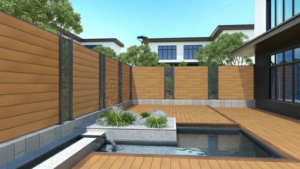
- Lattice Top Fencing — Combines solid composite panels at the base with a decorative lattice section at the top, adding visual interest while still providing strong privacy and security lower down.
Composite privacy fence with decorative lattice insert panels in a landscaped courtyard
- Composite Fence Gates — Matching composite gates complete the look of your fence line, offering the same low-maintenance, weather-resistant performance with a uniform, polished finish.
How to Choose the Right Composite Fence for Your Property
When selecting a composite fence, consider these key factors:
- Purpose — Are you prioritizing privacy, security, decoration, or a mix of all three? Solid privacy panels suit backyards near neighbors, while semi-privacy or lattice-top styles work well for front yards or decorative boundaries.
- Color and Texture — Choose a wood-grain finish and color tone that complements your home’s exterior, deck, or cladding for a cohesive outdoor design.
- Climate — Composite fencing performs well across a wide range of climates, but it’s worth confirming UV resistance and weatherproofing if you’re in an area with intense sun or heavy rain.
- Installation Method — Composite fence systems are typically designed for straightforward installation with post-and-rail or panel systems, which can save on labor costs.
- Manufacturer Quality — Not all composite fencing is created equal. Look for manufacturers with strong quality control, proven factory production standards, and a track record of durability testing.
Why Choose COOWIN Composite Fencing
At COOWIN, we manufacture composite fencing using our own advanced WPC formulation, engineered for strength, weather resistance, and a truly authentic wood look. Our composite fencing range includes:
- Composite Lattice Top Fence — easy to install and maintain
- Composite Semi-Privacy Fence — real wood aesthetics
- Composite Lattice Fence — with bespoke manufacturing solutions for custom projects
- Composite Privacy Fence — ultra-natural color and texture
- Composite Fence Gates — matching gates with low-to-no maintenance
As a manufacturer with our own factory, dedicated R&D center, and strict quality control process, COOWIN supports both individual homeowners and large-scale distributors and contractors with reliable, long-lasting composite fencing solutions, plus design and customization services to match specific project needs.
Frequently Asked Questions About Composite Fencing
Is composite fencing more expensive than wood?
The upfront cost of composite fencing can be slightly higher than basic wood fencing, but the total cost of ownership is usually lower because you avoid annual staining, sealing, and repair costs over the fence’s lifespan.
Does composite fencing fade in sunlight?
Quality composite fencing is engineered with UV-resistant additives that significantly slow fading, helping the color stay consistent for years compared to untreated wood.
Can composite fencing be installed DIY?
Many composite fence systems use straightforward post-and-panel or post-and-rail designs that experienced DIYers can install, though professional installation is recommended for best results and warranty compliance.
How do I clean a composite fence?
Simply hose it down or use mild soap and water with a soft brush. Unlike wood, there’s no need for sanding, staining, or sealing.
Ready to Upgrade Your Outdoor Space?
Composite fencing offers the perfect combination of beauty, durability, and low maintenance — making it one of the smartest investments you can make for your property. Explore COOWIN’s full range of composite fencing, fence gates, and matching decking and cladding solutions to create a cohesive, long-lasting outdoor design.
Browse Composite Fencing Products → | Request a Free Sample → | Contact Our Team →