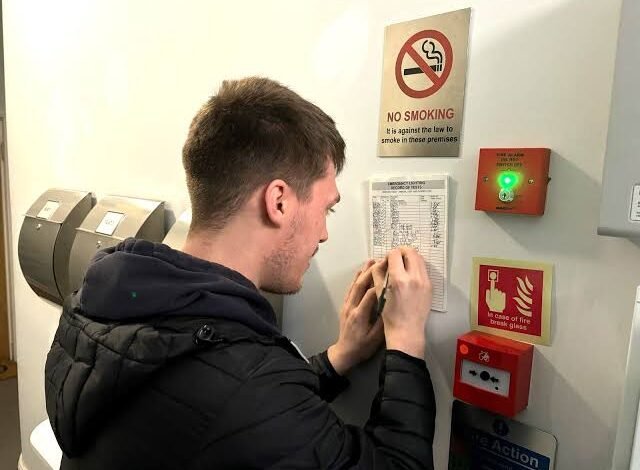
An emergency lighting test is useful only if its result leads to action. A failed fitting recorded in a notebook can remain a problem if nobody is assigned to arrange the repair. A practical maintenance process connects each check to an identifiable unit, a named person and a clear next step.
For a small premises, that process can be straightforward. Keep an accurate list of the equipment, agree the testing arrangements with a competent person and make fault follow-up part of ordinary building management. The record should show the condition of the system rather than simply that somebody completed a form.
Give every fitting an identity
Prepare a plan or location list that makes each emergency unit easy to find. A description such as “rear corridor light above stockroom door” is more useful than “light three” unless that number appears on a reliable plan.
Include illuminated signs and fittings with an integrated emergency function. Some equipment may resemble the general lighting, so confirm the inventory with the installer or maintenance contractor.
For each reference, keep the model information and relevant instructions. This helps the person interpreting a status indicator and the contractor selecting a replacement component. It also reduces the risk of the wrong unit being checked after a fault is reported.
Agree a routine appropriate to the installation
UK government guidance for offices and shops describes a monthly function test and an annual full discharge test, alongside checks relevant to the installed controls. The test method and responsibilities should be agreed for the particular system. Fire safety requirements also depend on the premises and jurisdiction.
Do not improvise by switching off the building’s electricity supply. Use the designed test facilities and the manufacturer’s instructions, with a competent person deciding how the checks should be carried out.
Plan a full duration test around battery recharge and the availability of protection afterwards. Government guidance highlights the need to consider recharge following a full discharge. Ask the maintenance contractor what arrangements the premises needs before scheduling the test.
Choose Emergency Lighting with maintenance in mind
The Emergency Lighting collection at LightHub Direct includes a self-test subcategory as well as several fitting formats. When replacing equipment, ask how the proposed model will fit into your existing checking and reporting process.
Self-test emergency lighting can automate specified tests, but somebody still needs to interpret the results and act on faults. Find out how the unit displays its status and whether its location makes that indication easy to inspect.
Maintenance access is another buying consideration. Check how batteries or other serviceable components can be reached. A fitting that is awkward to access above fixed shelving can make future repairs more disruptive than expected.
Record the result and follow the fault through
A useful entry identifies the date, unit reference, check performed, outcome and person completing it. For a fault, describe what was observed rather than guessing the cause. “Did not illuminate during function test” gives a contractor a clearer starting point than “battery broken”.
Note any visible damage, obstruction or changed surroundings. An emergency lighting unit can operate while a new storage arrangement interferes with its intended coverage. A test result should not obscure a separate layout problem.
Keep historic records available when reviewing recurring faults. Several failures in the same position may justify investigation beyond another like-for-like replacement. Let the competent contractor assess the cause.
Assign responsibility for arranging remedial work as soon as a defect is recorded. Note who has been contacted and the action agreed. The responsible person should consider any interim precautions needed while a defect remains unresolved, taking competent advice.
When work is completed, update the record with what was repaired or replaced and the checks carried out afterwards. An invoice alone may not clearly identify whether the original fault has been resolved.
Avoid deleting the first report once a repair is finished. Retaining the sequence makes the record useful to a new manager and helps distinguish an outstanding defect from an old one.
Review the list when the premises changes
Emergency lighting records need updating after alterations. Moving partitions, installing shelving or changing an exit route can make the original plan inaccurate. Ask for the lighting arrangements to be reviewed as part of the change.
During staff handover, demonstrate where records and instructions are kept. Show the person taking over how to identify units and whom to contact. A shared folder is useful only if its contents and ownership are clear.
Keep emergency lighting checks tied to the building as it is used today. The most useful record is one that allows a reported problem to be located, assessed and followed through to a documented resolution.