Exploring Farringdon Station: A Historic Transport Hub in Central London
Farringdon Station, located in the heart of Central London, is one of the city’s most historically significant and busiest transport hubs. Serving as an intersection for three major London Underground lines, the station plays a crucial role in daily commuter traffic and has an important place in London’s rich transportation heritage. This article will delve into the history, modern developments, and transport connections of Farringdon Station, highlighting its key role in the capital’s infrastructure.
History of Farringdon Station
Farringdon Station has been a part of London’s transportation network for over 150 years. It opened in 1863 as part of the first underground railway in the world—the Metropolitan Railway, which later became part of the London Underground network. The station was initially built to cater to the growing number of passengers travelling from the west of London to the heart of the city.
Over the years, Farringdon has undergone numerous upgrades and expansions, with its location being a pivotal part of the city’s development. Its historic architecture and design remain a testament to the era in which it was built, featuring distinctive Victorian elements that stand in contrast to the sleek and modern designs of the 21st century.
Early Years and Expansion
During the early years, Farringdon Station served primarily as a terminal for the Metropolitan Railway, with passengers travelling to and from areas like Hammersmith and Richmond. The station quickly became a vital link between the city and the growing suburbs, connecting passengers to a range of destinations.
In the 1930s, with the development of the Underground network, the station saw additional services, including connections to the Hammersmith & City Line. Over time, the station evolved, incorporating new technology and facilities to keep pace with London’s changing transportation needs.
The Station Today
Today, Farringdon Station is an integral part of the London transport system, connecting passengers to the Circle, Hammersmith & City, and Metropolitan Lines. It is also a major interchange for national and international services, with direct connections to other key railway stations such as St Pancras International. Farringdon is well-known for its proximity to major landmarks like the Museum of London and the Smithfield Market, drawing tourists and commuters alike.
The Role of Farringdon Station in London’s Transport Network
Central Location and Connectivity
Farringdon’s strategic location places it at the centre of London’s transport network. Situated between key districts such as the City of London and Clerkenwell, the station serves both as a commuter hub and a link to some of the city’s most important landmarks and business districts. Farringdon is ideally positioned for quick access to some of London’s most important destinations.
Farringdon Station is also one of the most accessible points for connecting to London’s major railway services. With direct connections to St Pancras International, King’s Cross, and Liverpool Street, it plays an important role in providing links to the national rail network and high-speed services to the North and Europe via the Eurostar.
Crossrail: A New Era for Farringdon
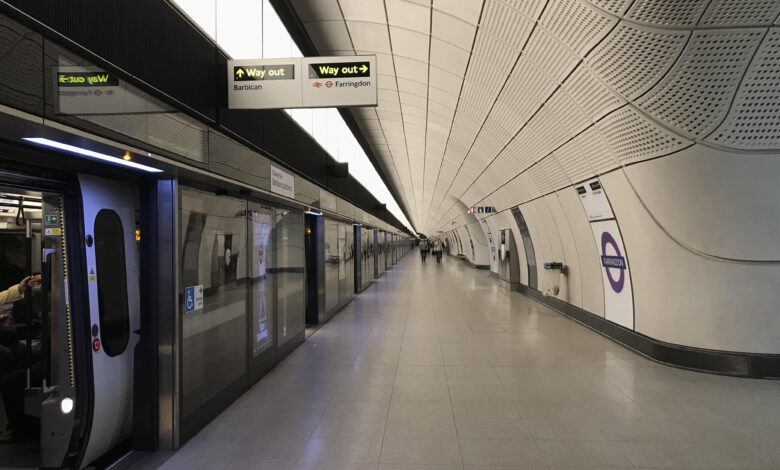
In recent years, Farringdon Station has undergone a major transformation with the introduction of Crossrail, now known as the Elizabeth Line. This new rail service has significantly increased Farringdon’s capacity and role within the London transport network. The introduction of the Elizabeth Line offers passengers faster and more efficient links to the west and east of London, with direct services to Heathrow Airport, Reading, and beyond.
The expansion and refurbishment of Farringdon as part of the Crossrail project has modernised the station’s facilities, providing enhanced platforms, improved accessibility features, and a larger concourse to manage the growing number of passengers.
Farringdon Station’s Modern Amenities
Enhanced Facilities for Commuters
As part of its ongoing transformation, Farringdon Station has been upgraded with modern amenities that make it a more efficient and comfortable experience for commuters. The station now boasts a larger, state-of-the-art concourse with improved access to all platforms. The introduction of step-free access at Farringdon has been a key feature in making the station more accessible for passengers with disabilities.
New ticketing systems, including contactless payment options, have been introduced to ensure a seamless travel experience. Additionally, the station’s digital signage provides up-to-date information about train schedules and platform changes, improving the overall efficiency and experience for commuters.
Retail and Dining Options
For those looking to take a break from their commute, Farringdon Station also offers a range of retail and dining options. Passengers can enjoy everything from coffee shops to convenience stores, making it a convenient stop for grabbing a quick bite or essential items. The station’s growing range of eateries and retail outlets contributes to the vibrant atmosphere of the surrounding area.
Sustainable Transport and Eco-Friendly Initiatives
Farringdon Station is also at the forefront of London’s efforts to promote sustainable transport options. The station has incorporated eco-friendly features into its design, including energy-efficient lighting, green roofs, and improved waste management systems. These measures align with the broader goals of reducing London’s carbon footprint and making public transport a more sustainable and attractive option for residents and visitors alike.
Future Developments at Farringdon Station
Further Expansion with Crossrail
Looking ahead, Farringdon Station is set to play an even more important role in London’s transport network with the completion of further phases of Crossrail. The station will continue to serve as a hub for passengers travelling between central London and areas in the west and east, and its enhanced capacity is expected to alleviate congestion on other parts of the Underground network.
The Crossrail expansion will bring even more services to Farringdon, making it an essential part of London’s transport infrastructure. It is expected that passenger numbers will continue to rise, further cementing the station’s status as a central hub in London’s public transport system.
Revitalisation of the Area Around Farringdon
In addition to upgrades to the station itself, there are plans to revitalise the surrounding area of Farringdon. As the station becomes busier and more central to London’s transport network, there will be a concerted effort to improve the public spaces and create a more vibrant urban environment around the station. New office spaces, retail outlets, and public squares are set to transform Farringdon into a modern and thriving district.
Conclusion
Farringdon Station is more than just a transport hub; it is a symbol of London’s historical and ongoing evolution as a global metropolis. With its rich history, key role in the city’s transport infrastructure, and exciting future developments, Farringdon continues to serve as a central point for commuters and tourists alike. As the station grows and modernises, it will remain an integral part of London’s transport network for generations to come.
Farringdon’s role in the future of London is clear: it will continue to provide an essential service for millions of passengers, serving as a bridge between the city’s past, present, and future